標題
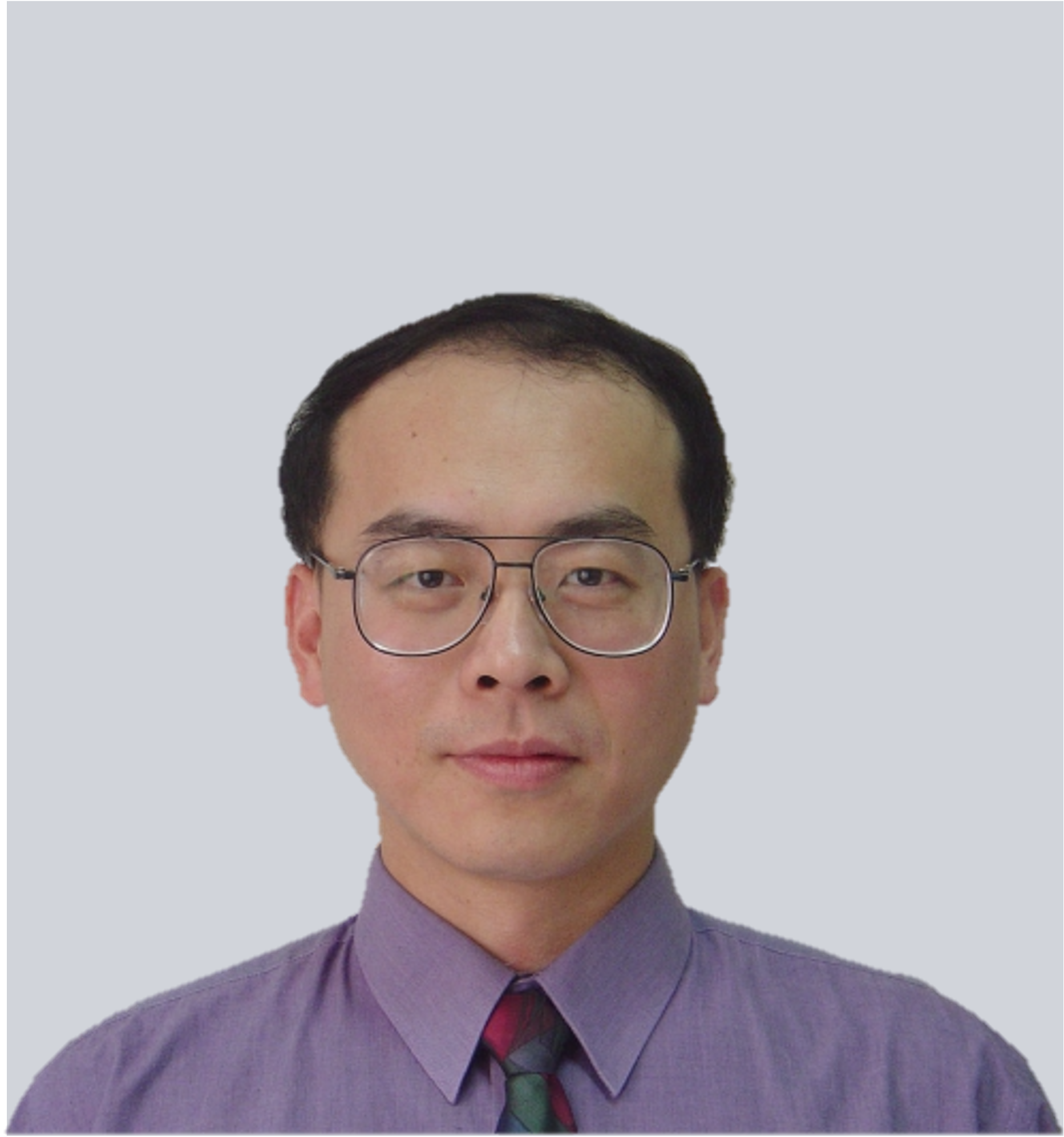
✕Shao-Liang Cheng, Professor
Research Interests
As device dimensions shrink into the nanoscale generation, advanced process research and development capable of integrating 0D and 1D nanostructured materials into semiconductor nanodevices has received widespread attention in recent years. However, regulating the preparation of large-area, regularly arranged, and uniformly sized nanostructures has always been a major challenge that needs to be overcome in related processes. Furthermore, regarding practical device applications, the interfacial reactions between nanostructured materials of different dimensions and silicon-based semiconductor wafers, along with the corresponding property changes, are often the primary considerations for whether these nanostructured materials can be truly integrated into future advanced semiconductor devices. Therefore, the correlations between the crystal structure, phase transformation, composition distribution, thermal stability, size, and shape of nanomaterials and their physical and chemical property changes require more in-depth research. Mastering the growth mechanisms and atomic arrangement structures of nanoparticles, nanowires, and nanotubes will help control the generation of high-quality nanomaterials and further integrate them into the research and preparation of functional nanostructured devices.
Current research focuses of this laboratory include:
1. Promoting the formation and thermal stability of low-resistance metal contacts on silicon and silicon-germanium semiconductor substrates.
2. Preparation, characterization, and analysis of metal and semiconductor nanomaterials.
3. Manipulating the growth of novel nanostructured arrays with different dimensions and ordered arrangements using nano-template methods.
4. Interfacial reactions and material property testing between multi-dimensional nanomaterial arrays and silicon-based semiconductor wafers.
Publications
- S. L. Cheng and W. C. Hsiao, "Electroless Synthesis of Pure Nickel Metal Nanotubes using Silicon Oxide Nanowires as Removable Templates," Electrochem. Solid-State Lett. 10 (2007) D142.
- S. L. Cheng, S. L. Wong, S. W. Lu, and H. Chen, "Large-Area Co-Silicide Nanodot Arrays Produced by Colloidal Nanosphere Lithography and Thermal Annealing," Ultramicroscopy 108 (2008) 1200.
- Y. C. Chou, W. W. Wu, S. L. Cheng, B. Y. Yoo, N. V. Myung, L. J. Chen, and K. N. Tu, "In-Situ TEM Observation of Repeating Events of Nucleation in Epitaxial Growth of Nano CoSi2 in Nanowires of Si," Nano Lett. 8 (2008) 2194.
- S. L. Cheng, C. H. Chung, and H. C. Lee, "A Study of the Synthesis, Characterization, and Kinetics of Vertical Silicon Nanowire Arrays on (001)Si Substrates," J. Electrochem. Soc. 155 (2008) D711.
- S. L. Cheng, C. H. Wang, and H. Chen "Formation and Characterization of Periodic Arrays of Nickel Silicide Nanodots on Si(111) Substrates," Jpn. J Appl. Phys. 48 (2009) 06FE06.
- F. M. Chang, S. L. Cheng, S. J. Hong, Y. J. Sheng, and H. K. Tsao, "Superhydrophilicity to Superhydrophobicity Transition of CuO Nanowire Films," Appl. Phys. Lett. 96 (2010) 114101.
- S. L. Cheng, C. Y. Chen, and S. W. Lee, "Kinetic Investigation of the Electrochemical Synthesis of Vertically-Aligned Periodic Arrays of Silicon Nanorods on (001)Si Substrate," Thin Solid Films 518 (2010) S190.
- S. L. Cheng and H. C. Peng, "Characterization and Growth Kinetics of Electroless Pure Nickel Thin Films on Si(001) Substrates," J. Electrochem. Soc. 157 (2010) D81.