
標題
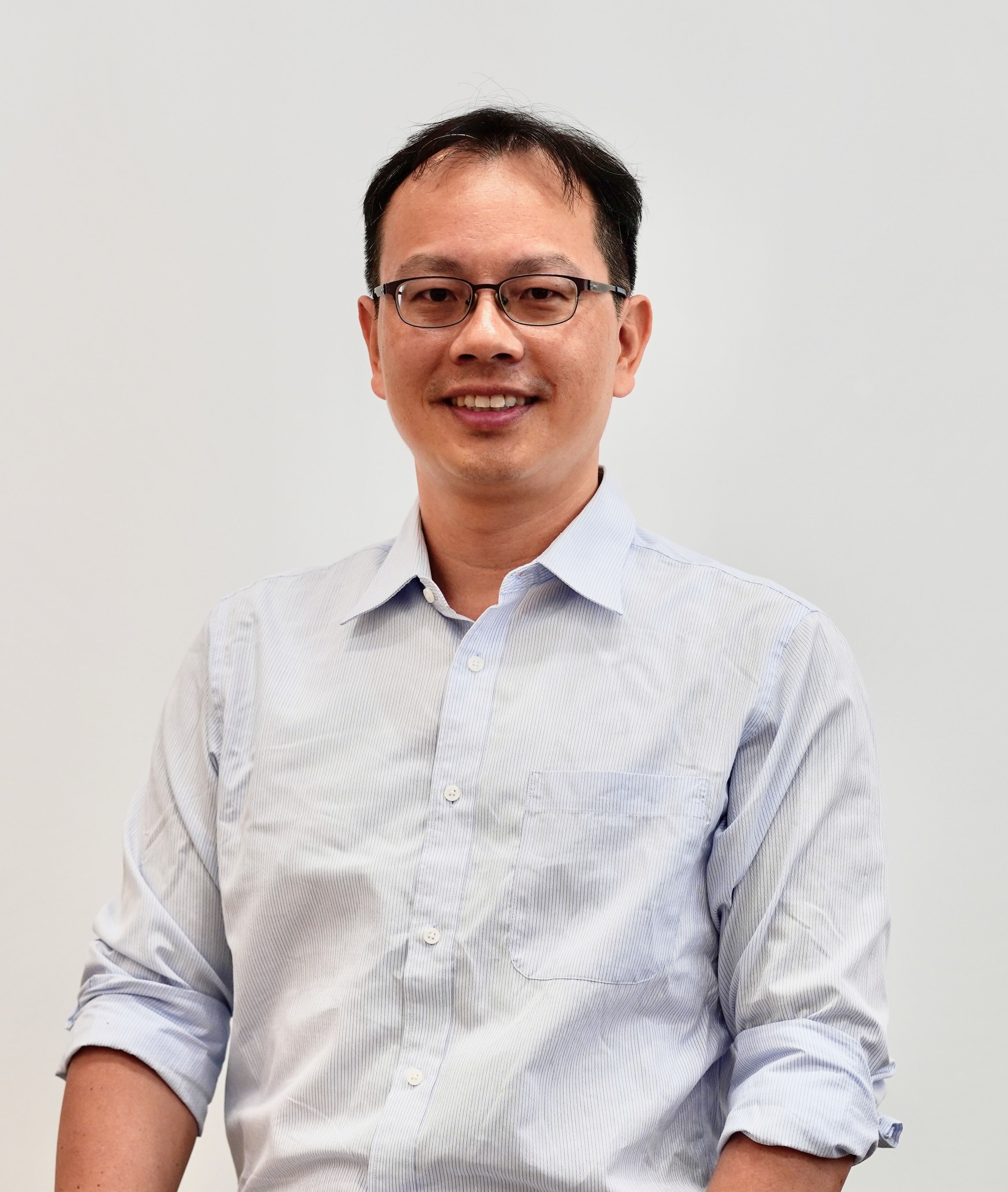
✕Chun-Jen Huang, Professor and Chair
Research Interests
1. Design of surface-functionalized self-assembling molecules; 2. Development of precision synthesis techniques for ionic polymers and biomedical applications; 3. Intelligent hydrogels for biomedical and energy applications.
Publication list in Google Scholar :
https://scholar.google.com/citations?hl=en&user=K1aOU3gAAAAJ&view_op=list_works&sortby=pubdate
Molecular engineering is a growing discipline based on the concept of “bottom-up” principle. This is focused on designing and studying molecular properties, functions, and interactions to develop improved materials, systems, and processes tailored for specific applications. Briefly, the observable properties of a macroscopic system are modified by directly altering its molecular structure.
Our group focuses on developing zwitterionic and electrolyte materials in the form of self-assembling small molecules and linear/crosslinked macromolecules for various applications, including medical coatings, drug delivery, hydrogels, functional biointerfaces, sustainability and green energy. We investigate the structure-property relationships of ionic materials in water, electrolytes, and biological systems, as outlined in the Hofmeister series from the 1880s–1890s. Based on these findings, we synthesize a variety of ionic materials to address contemporary challenges and to advance the materials science.
Specific applications are as follows :
Medical Coatings
To prevent biofouling—such as contamination, bacterial infection, and foreign body reactions—and to enhance the biocompatibility of medical devices, surface passivation is achieved through the modification of zwitterionic materials. Zwitterionic materials consist of equal amounts of cations and anions, which helps maintain charge neutrality and superhydrophilicity. This feature minimizes non- specific adsorption by avoiding endothermic electrostatic attraction and entropic dehydration. We have developed self-assembled coatings, including thiol-, silane-, and catechol-based small molecules, as well as anchorable zwitterionic polymers, for the modification of substrates such as glass, wafers, metals, plastics, oxides and tissues.
.png)
Self-Assembling Materials
Under certain circumstances, self-assembling materials enable the spontaneous formation of ordered nanostructures driven by secondary forces, such as hydrophobic interactions, π-π stacking, π-cation interactions, electrostatic attraction, coordinative interactions, hydrogen bonding, and so on. These materials have attracted significant attention due to their unique characteristics, including molecular-level control, ordered structures, high packing density, and fine surface modifications that tailor physicochemical properties. We have gained substantial fundamental insights into self-organization, structure-property relationships, and interfacial phenomena from zwitterionic self-assembling materials. Additionally, we address an important issue in silane chemistry by developing novel functional silatranes, which consist of a five-membered cage structure. The cage structure protects organic silanes from fast hydrolysis and achieve "controlled silanization," resulting in uniform, thin, and highly oriented siloxane coatings. Together, these materials have been applied in biosensors, drug delivery, antifouling coatings, anti-fogging, circulating tumor cell separation, theranostic applications, and oil-water separation.
.png)
Sustainable, Self-Healable and Biodegradable Materials
There is growing concern about the environmental pollution caused by plastic waste, which significantly affects nearly every marine and freshwater ecosystem worldwide. As a result, sustainable plastic materials are being developed for green chemistry and society. We have fabricated self-healing polymers by incorporating aliphatic/aromatic disulfide bonds and amino-yne click chemistry to create reversible dynamic covalent bonds, enabling spontaneous healing at room temperature without external stimuli. These self-healing polymeric networks have been applied to cell encapsulation, cell phantoms for molecular imaging, recovery, and remolding. Additionally, we have developed biodegradable materials for drug delivery and tissue engineering. These bio-inspired degradable materials are synthesized using natural building blocks and modified through environmentally friendly processes to support green chemistry.
.png)
Tough Zwitterionic Hydrogels
Hydrogel-based materials, known for their high water content, transparency, biocompatibility, and similarity to the extracellular matrix, have gained prominence in various biological applications, including drug delivery, 3D scaffolds, injectable tissue engineering, surgical adhesives, and tissue sealants. However, due to their highly swollen network in water, hydrogels typically exhibit brittle and soft mechanical properties. We are developing tough hydrogels through various approaches, such as nanocomposite, double network, and microgel techniques. Additionally, we are exploring pH, ionic strength, and temperature-responsive functionalities to fabricate smart soft actuators. These hydrogels have been applied in a wide range of fields, including wound dressings, medical coatings, marine coatings, osmotic power generation, and thermoelectricity.
.png) Industrial Projects :
Industrial Projects :
Industrial Technology Research Institute (ITRI, Taiwan), Personal Genomics, Inc (PGI), Tri-Service General Hospital, Landseed Hospital, General Silicones Co. Ltd., Hon Hai Precision Industry Co., Ltd. (Foxconn), Office of Naval Research (ONR, USA), Coatmed Inc., Master & Frank Enterprise Co. LTD., Formosa Plastics Co., Everlight Chemical, Shenmao Technology Inc., Acrocyte Therapeutics Inc., Giga Solar Materials Corp.
.png)
Awards
- PhD scholarship from the Max-Planck Institute (Oct. 2007-Dec. 2008)
- Travel grant from Ministry of Education, Taiwan (Europt(r)ode X, Prague, Czech Republic, March 28-31 2010)
- Oral Presentation Award, Biomaterials & Controlled Release Society, Taiwan (Apr. 28th, 2012)
- Domestic Scholar Visiting Fellowship, Academia Sinica (Taiwan), (Jul.-Aug. 2012)
- Domestic Scholar Visiting Fellowship, Academia Sinica (Taiwan), (2013)
- Excellent Young Investigator Award, The 3rd International Symposium of Materials on Regenerative Medicine, (Aug. 2014)
- Gold Medal Award, "Chin-Li-Ma" Cup Entrepreneurship Competition (Nov. 2014)
- Young Investigator Award, The 5th Asian Biomaterials Congress (ABMC5) (May, 2015)
- Distinguished Teaching Award, College of Engineering, NCU (May, 2015)
- Bronze Medal Award, "Chin-Li-Ma" Cup Entrepreneurship Competition (Nov. 2015)
- The First Runner-Up, 3rd Silicone Creative Application Design Competition, Lin Jing-Chuan Education Foundation (Dec. 2015)
- Outstanding Research Award, National Central University. (Jan. 2016)
- Outstanding Young Scholar Research Project, MOST, Taiwan. (July, 2016)
- Bronze Medal, LITE-ON Innovation Award (Sep. 2016)
- Outstanding Technology Transfer Award, National Central University. (Oct. 2016)
- Outstanding Research Award, National Central University. (Jan. 2017)
- Distinguished New Faculty Award, National Central University (Jan. 2018)
- Outstanding Young Scholar Research Project, MOST, Taiwan. (July, 2019)
- Chemical Engineering Masterpiece Award (Paper: "From ion-specific effects to antifouling zwitterionic materials"), Taiwan Institute of Chemical Engineers (Nov. 2019)
- Outstanding Research Award, National Central University. (Jan. 2020)
- Outstanding Research Award, National Central University. (Jan. 2021)
- Distinguished Professorship, National Central University. (Jan. 2022)
- Prof. Shih-Yow Huang Memorial Award, Biotechnology and Biochemical Engineering Society of Taiwan. (Jun. 2022)
- Outstanding Young Scholar Research Project, NSTC, Taiwan. (July, 2022)
- Young Scholar Award, Taiwan Membrane Society (2023)
- Excellence Award, Industry-Academia Cooperation Project Performance Evaluation, Department of Engineering and Technologies, NSTC (2023)
- Distinguished Paper Contribution Award, Research Excellence Promotion Program, NCU, 2023
- Excellent Industry-Academia Contribution Award, Research Excellence Promotion Program, NCU, 2023
- 2nd Place, 20th VGH-UST Joint Research Paper Award, 2024